
Located directly opposite the historic Stock Exchange and steps from Grand-Place, our hotel has welcomed travelers to central Brussels for years.
Our experience hosting guests from all over the world has taught us that the best way to enjoy the city is not by rushing between landmarks, but by exploring its neighborhoods at a comfortable pace.
Brussels is compact and highly walkable, seamlessly blending historic squares, modern European institutions, covered galleries, and lively local markets. To help you plan your itinerary efficiently, we compiled this guide for your first stay.
Below are the top activities, recommended neighborhood groupings, and key timing tips to help you make the most of your trip. Let’s get started.
What to Do In Brussels
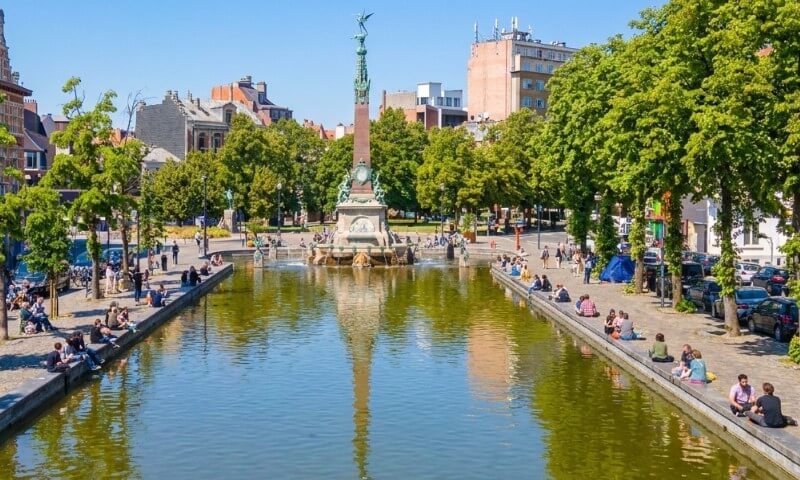
Group nearby places to reduce unnecessary travel. Grand-Place, the galleries, Mont des Arts and Sablon form an easy central route. The Atomium, European Quarter and Horta Museum work better as separate blocks. Here are things to do in Brussels for your first-time visit:
Royal Saint-Hubert Galleries
| Activity | Best Area | Suggested Duration | Book Ahead? |
| Grand-Place and historic streets | City Centre | 2 to 3 hours | No |
| Royal Saint-Hubert Galleries | City Centre | 30 to 60 minutes | No |
| Magritte or Old Masters Museum | Royal Quarter | 1.5 to 2.5 hours | Recommended |
| Sablon and Marolles | South of centre | 2 to 3 hours | No |
| Atomium | Heysel | 2 to 3 hours | Recommended |
| Parlamentarium | European Quarter | About 90 minutes | Recommended |
| Horta Museum | Saint-Gilles | 1 to 1.5 hours | Yes |
| Food and beer tasting | Centre or Sainte-Catherine | 1 to 2 hours | Depends on venue |
Start at Grand-Place, Preferably Early
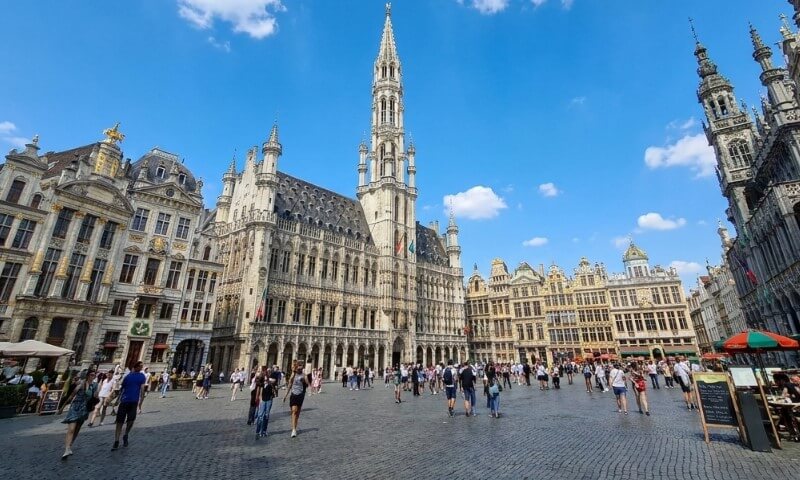
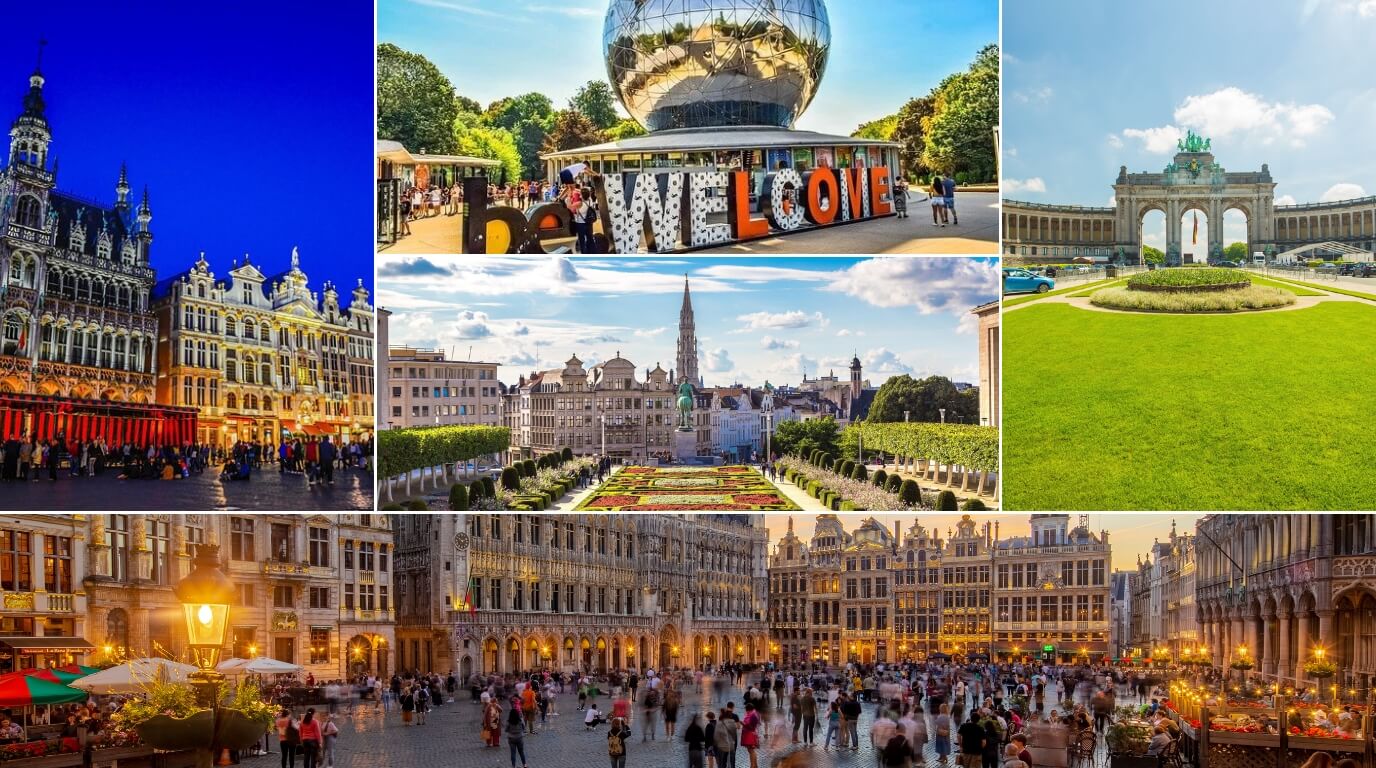
Grand-Place is the best starting point because Brussels’ main historic sights radiate from the square. UNESCO listed Grand-Place in 1998, recognising its civic buildings, former guild houses and coherent reconstruction following the French bombardment of 1695.
Arrive before 09:00 for clearer views of the Town Hall façade and guild-house details. Return after dark when possible, since the illuminated buildings create a different atmosphere.
Walk around the full perimeter and compare the municipal authority represented by Brussels Town Hall with the commercial history embodied by the guild houses.
Maison du Roi, opposite the Town Hall, contains the Brussels City Museum. Its collections cover the city’s development and include the original Manneken Pis statue.
From Grand-Place, take the short walk to the outdoor Manneken Pis, then continue through the surrounding side streets rather than returning by the same route. The statue is small and often crowded, so treat it as a brief stop within a wider historic-centre walk.
Walk Through the Royal Saint-Hubert Galleries
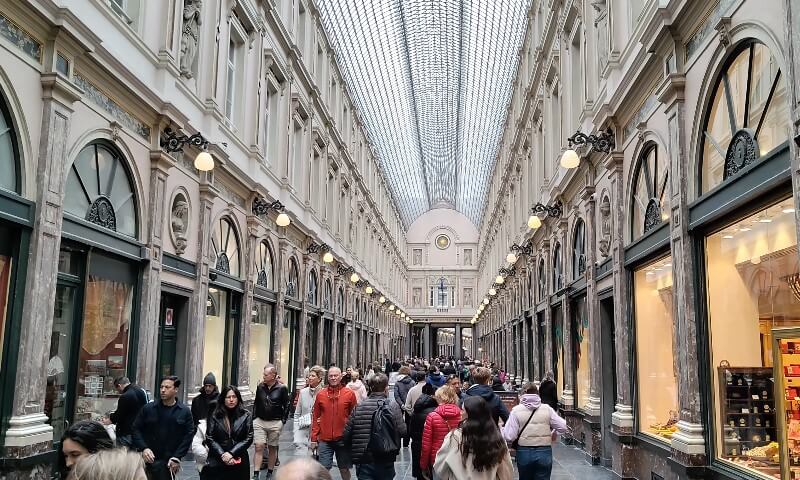
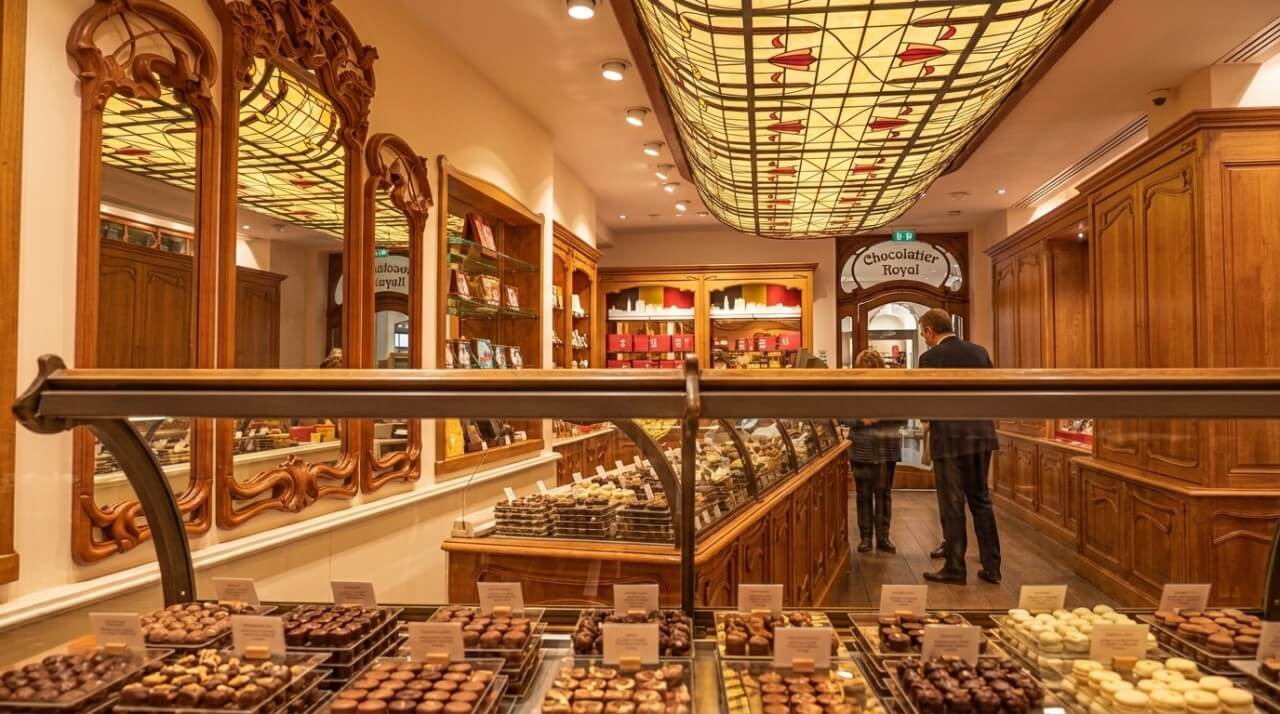
The Royal Saint-Hubert Galleries offer an easy extension from Grand-Place. Opened in 1847, the covered complex includes the King’s Gallery, Queen’s Gallery and Princes’ Gallery, with cafés, theatres, bookshops and chocolate houses beneath its glass roof. The city’s official heritage guide explains the galleries’ place in Brussels’ architectural history.
Allow around 30 minutes for the architecture or longer for coffee and shopping. Prices can be higher than in less central neighbourhoods, so choose one deliberate purchase rather than sampling every shop.
The galleries also work well in rainy weather. Their central position allows visitors to continue towards the Cathedral of St Michael and St Gudula, Brussels-Central station or Mont des Arts without making a long detour.
Essential Insider Tips for Visitors
To make the most of your visit to the Royal Saint-Hubert Galleries, keep these practical details and historic highlights in mind:
- Birthplace of the Belgian Praline: Visit the original Neuhaus shop in the Queen’s Gallery (Galerie de la Reine). It was in this exact location in 1912 that Jean Neuhaus II invented the Belgian praline (filled chocolate).
- Standout Interior to Step Inside: Don’t just look at chocolate shop windows – step into Librairie Tropismes in the Princes’ Gallery. This independent bookstore is housed in a grand 19th-century ballroom featuring high ceilings, mirrors, and classic plasterwork.
- Best Time for Photography: If you want clear photos of the Italian Renaissance-style glass and cast-iron vaulting without dense crowds, aim to walk through before 09:00 AM or after 08:00 PM when the shopfronts light up beautifully.
- Watch for Pickpockets: Because the arcades are covered, busy, and often feature buskers or street performers, crowds gather tightly. Keep an eye on your personal belongings during peak afternoon hours.
- A Night Out Option: Beyond daytime shopping, the galleries house the Théâtre Royal des Galeries and Cinema Galeries (an arthouse cinema showing movies in their original language with subtitles), making it a great evening spot when the rain sets in.
Choose One Major Museum, Not Several
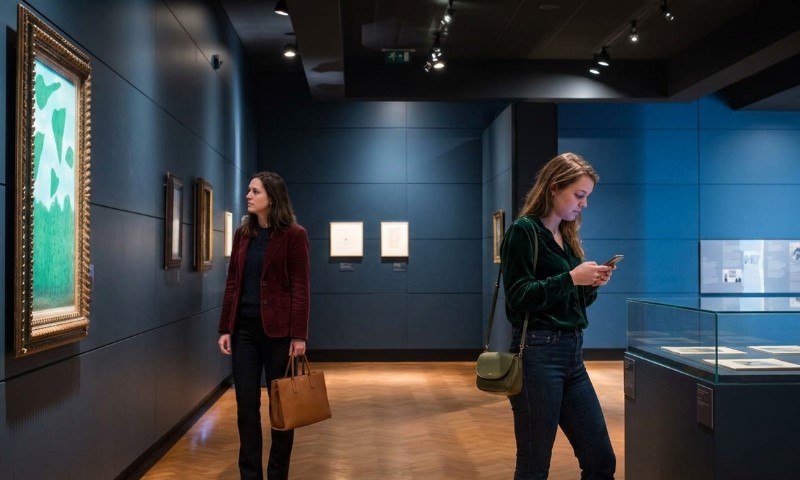
One well-chosen museum produces a better first-day experience than rushing through several collections. The strongest central options are the Magritte Museum and Old Masters Museum near Mont des Arts.
The Magritte Museum suits visitors interested in surrealism and René Magritte’s career. The Old Masters Museum gives greater weight to Flemish painting, including work by Pieter Bruegel the Elder, Peter Paul Rubens and Jacob Jordaens.
Both museums currently open Tuesday to Friday from 10:00 to 17:00 and at weekends from 11:00 to 18:00. They close on Mondays and selected public holidays. Check the current museum hours before travelling, particularly around Belgian public holidays.
Book online when your itinerary is tight. Entry through the dedicated Magritte entrance is reserved for online ticket holders, while walk-up visitors use the main Royal Museums entrance. Security controls can add waiting time during busy periods.
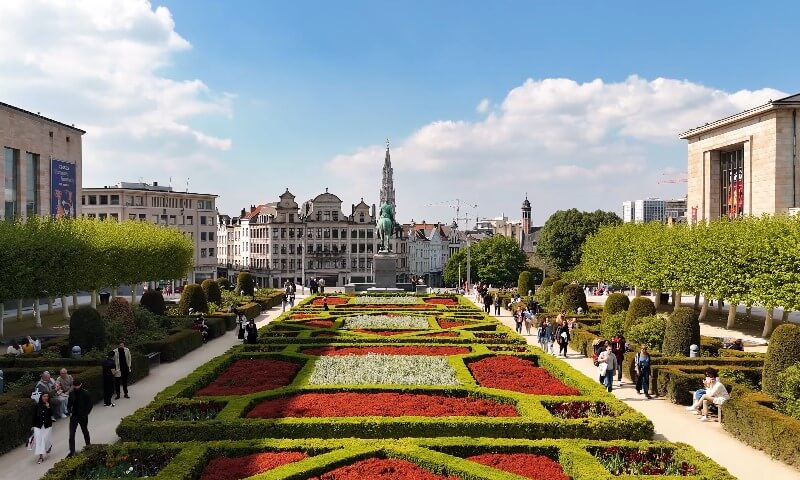
Mont des Arts makes a useful pause nearby. The elevated garden and steps provide a broad view across the lower city and connect the Royal Quarter with streets leading back to Grand-Place. It also appears among the city’s best Brussels viewpoints.
Explore Sablon and Marolles on Foot
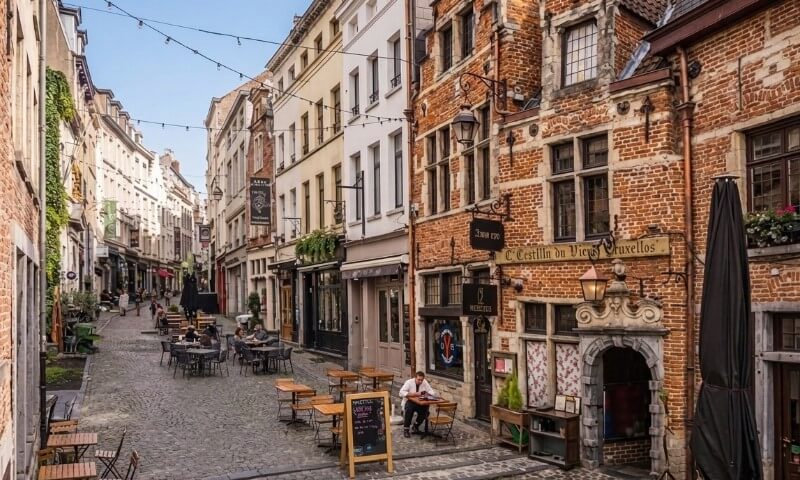
Sablon and Marolles reveal a more lived-in side of central Brussels. Begin around Place du Grand Sablon, known for antiques, galleries and chocolate shops, then walk downhill towards the Marolles district.
Place du Jeu de Balle hosts the city’s daily flea market. Earlier visits usually offer the broadest selection, while later hours feel calmer. Expect old prints, records, furniture, household objects and miscellaneous collectables rather than a polished antiques fair.
Rue Haute and Rue Blaes connect the market with vintage shops and casual places to eat. The nearby Place Poelaert viewpoint gives a wide panorama over the lower city. A public lift links the upper and lower levels, saving visitors from a steep return climb.
Marolles is a better place for unstructured browsing than hurried sightseeing. Leave enough time to enter shops, inspect market stalls and stop for coffee without watching the clock every few minutes.
Visit the Atomium for Brussels’ Most Recognisable Modern Landmark
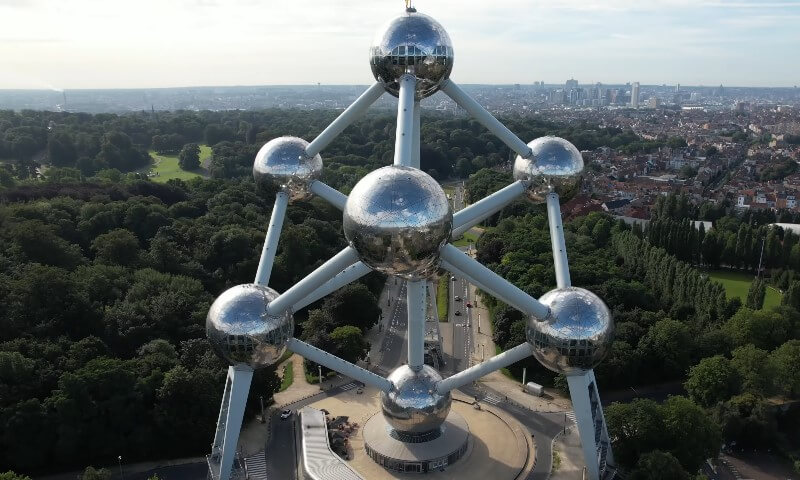
The Atomium is worth the journey when architecture, panoramic views or Expo 58 history interests you. Built as the flagship structure of the 1958 Brussels World’s Fair, the landmark now functions as an exhibition venue, cultural space and viewpoint.
The building opens daily from 10:00 to 18:00 in 2026, with last entry at 17:30 on regular days. Crowds are often heaviest between 11:00 and 15:00, so arriving at opening time usually produces a smoother visit. Online tickets remove the ticket-office queue but do not guarantee priority at the building entrance. Confirm any seasonal changes through the official opening schedule.
From the centre, take Metro Line 1 to Beekkant, change to Line 6 and leave at Heysel. The Atomium access guide provides route information for metro, tram, bus, bicycle and car travel.
Mini-Europe sits nearby and can be paired with the Atomium. Combining both attractions may consume most of an afternoon, so travellers with only one day in Brussels should remain in the historic centre unless the Atomium ranks high on their personal list.
See How the European Union Works
The European Quarter is most rewarding when you enter a visitor centre rather than photographing office buildings from outside. Parlamentarium explains European integration and parliamentary work through an interactive multimedia route available in multiple languages.
Admission is free, and a normal visit lasts about 90 minutes. Opening times vary by day, with shorter Monday hours than during the rest of the working week. Booking secures access, while visitors without reservations are admitted only when capacity allows. The official European Quarter visitor guide contains current practical information.
The European Quarter creates a useful contrast with the medieval core. Grand-Place presents Brussels as a historic commercial city, while the Parliament district reflects its contemporary role in European public life.
Follow Brussels’ Comic-Strip Identity
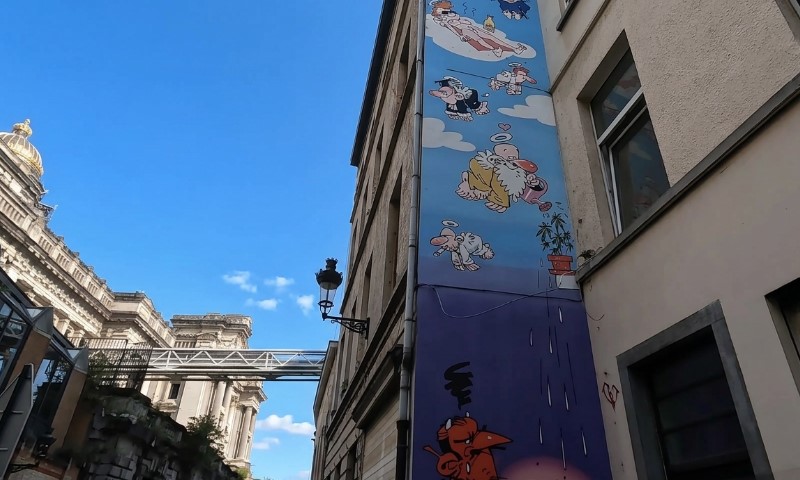
Comic art appears across Brussels in murals, specialist shops and museums. The official Comic Strip Trail links large wall paintings featuring characters and artists connected with Belgium’s comic-book tradition.
A full route can take several hours, so select murals near places already on your itinerary. Central examples fit easily around Grand-Place, the Bourse district and the walk towards the Belgian Comic Strip Center.
Families often find the murals easier to include than another formal museum. They also give visitors a reason to notice residential streets and side roads that fall outside the standard monument route.
Key Murals to Spot Near the Centre
- Tintin (Rue de l’Étuve): Located just a few steps from Manneken Pis. This multi-story mural shows Tintin, Captain Haddock, and Snowy descending a fire escape and is the most photographed wall on the trail.
- Broussaille (Rue du Marché au Charbon): Created by Frank Pé in 1991, this was the very first comic wall commissioned in Brussels.
- The Smurfs (Carrefour de l’Europe): Features Peyo’s blue characters near Central Station, making it a convenient stop right after arriving downtown.
- Gaston Lagaffe (Rue des Sables): Positioned right near the Belgian Comic Strip Center, depicting Franquin’s notoriously lazy office anti-hero.
Top Museums & Collector Shops
- Belgian Comic Strip Center (Centre Belge de la Bande Dessinée): Housed inside a 1906 former textile warehouse designed by famed Art Nouveau architect Victor Horta. It pairs over 4,000 m² of comic art plates with historic architecture.
- MOOF (Museum of Original Figurines): Located underground near Central Station, focusing on 3D statues, scale models, and collectible figures.
- Boutique Tintin (Rue de la Colline): A dedicated store just off Grand-Place offering official books in multiple languages, scale figures, and gifts.
Trail Tips for Tourists
- Grab the Official Map: Pick up a printed Comic Book Route map for a small fee at the Visit Brussels tourist office in Grand-Place, or download the digital map from their official site.
- Look Up and Around Corners: Many murals are painted high on gable ends or hidden along side alleys, so keep your eyes scanning above street level.
- Turn Walking into a Scavenger Hunt: If traveling with kids, use the trail as a character-spotting game to keep long walks between main sights entertaining.
Make Time for Art Nouveau
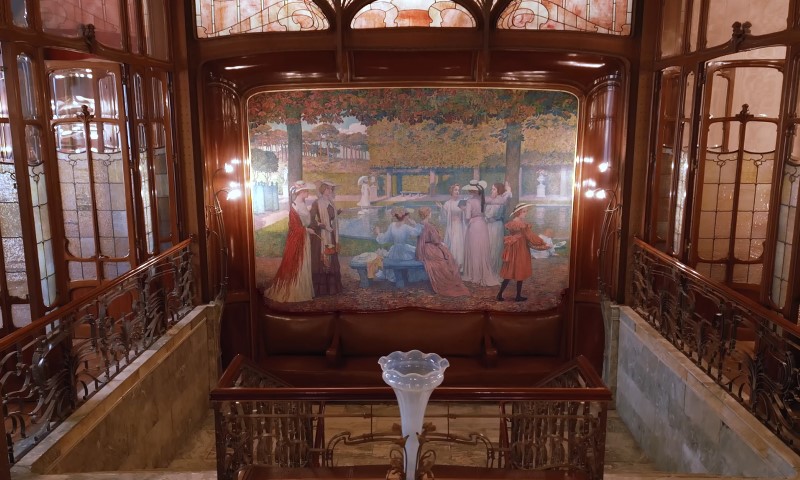
Brussels played a defining role in Art Nouveau, and Victor Horta’s architecture provides the clearest introduction. Horta completed Hôtel Tassel in 1893, a project closely associated with the movement’s emergence in the city. The Brussels Art Nouveau programme highlights important buildings, exhibitions and architectural routes.
The Horta Museum occupies the architect’s former home and studio in Saint-Gilles. Small historic interiors limit capacity, making advance booking important.
Current hours are Tuesday to Friday from 14:00 to 17:30 and weekends from 11:00 to 17:30, with Monday closure. Adult admission is €14 in 2026. Photography is restricted inside the historic house, and the Horta Museum visitor information lists current prices and access conditions.
Architecture fans can continue through Saint-Gilles and Ixelles, looking for curved ironwork, decorative stone, stained glass and asymmetrical façades. Many important houses remain private or open only at limited times, so confirm access before building an itinerary around one address.
Eat Brussels Specialities With a Plan
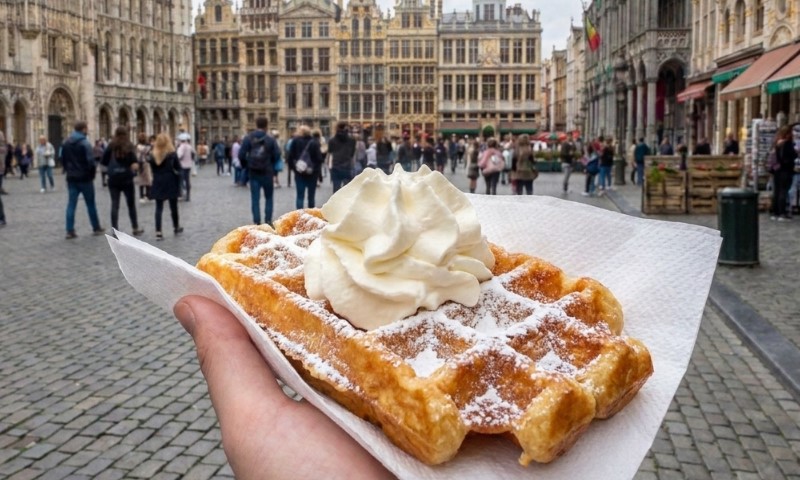
Brussels food is best approached through a few deliberate stops. Central tourist streets make every famous speciality easy to find, but quality and value vary sharply within a small area.
For waffles, choose a style. A Brussels waffle is generally rectangular, light and crisp, while a Liège waffle is denser, sweeter and often eaten without elaborate toppings. Chocolate shops range from historic luxury houses to small contemporary makers. A mixed box lets visitors compare fillings without buying a large quantity of one flavour.
Belgian chips commonly arrive in paper cones with a broad choice of sauces. For a sit-down meal, look for carbonnade flamande, waterzooi or mussels when available. The city’s guide to Brussels culinary specialities also covers waffles, chocolate, beer, speculoos and chips.
Beer menus can be extensive, so tell staff whether you prefer sour, dark, strong, fruity or low-alcohol beer. A recommendation based on taste usually works better than selecting a famous label at random.
Spotting Quality vs. Tourist Traps
- Avoid the “Topping Trap”: Tourist stands surrounding Grand-Place often pile synthetic whipped cream and canned fruit onto low-quality, pre-made waffles. Locals eat Liège waffles plain to enjoy the caramelized pearl sugar, or Brussels waffles with a simple dusting of powdered sugar.
- Seek Authentic Pralines: Skip souvenir shops displaying giant chocolate fountains. Look for historic, artisanal chocolatiers (such as Neuhaus, Pierre Marcolini, or Mary) or small craft makers where pralines are crafted fresh with high cocoa butter content.
- Buy by Weight (Ballotin): Instead of pre-packaged gift tins, ask for a traditional cardboard ballotin box filled with a custom selection of pralines and ganaches. It is fresher, customizable, and offers better value per gram.
Belgian Frites & Traditional Dining Essentials
- Go to a Dedicated Friterie (Frietkot): For the crispest chips, visit standalone fritteries (like Maison Antoine or Frit Flagey) rather than sit-down tourist restaurants. Authentic Belgian frites are double-fried in beef tallow for a crisp exterior and pillowy center.
- Explore Regional Sauces: Don’t just settle for ketchup. Ask for classic local pairings like Andalouse (mayo, tomato paste, and mild peppers), Samouraï (spicy mayo), or Joppiesaus (mildly sweet curry mayo).
- Mind the Mussels Season: Traditional moules-frites are best enjoyed during their natural peak season (July through April). Avoid ordering mussels on Sundays or Mondays when fresh seafood deliveries to smaller spots are less common.
- Tipping & Service Norms: Service charges are legally included in all restaurant bills across Belgium. Leaving a 5-10% cash tip or rounding up the bill is appreciated for exceptional sit-down service, but not strictly required.
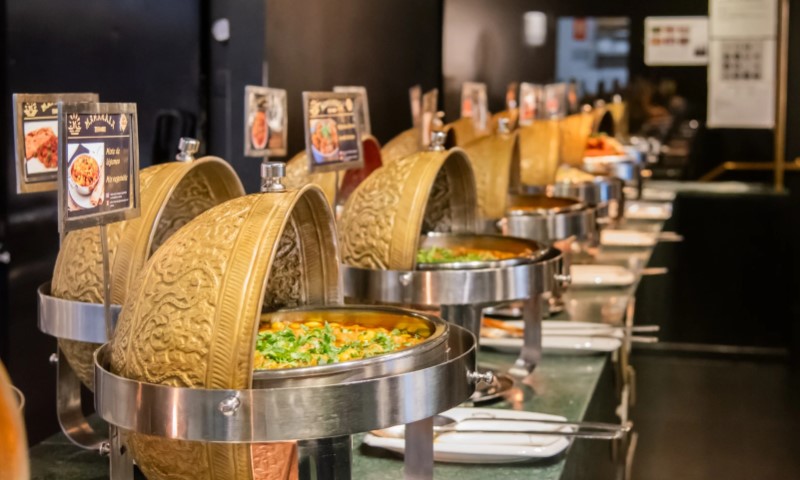
Note: Travellers craving something more exotic can swap frites for the Pakistani and Indian dishes served at Maharaja Tandoori.
Navigating Belgian Beer Culture
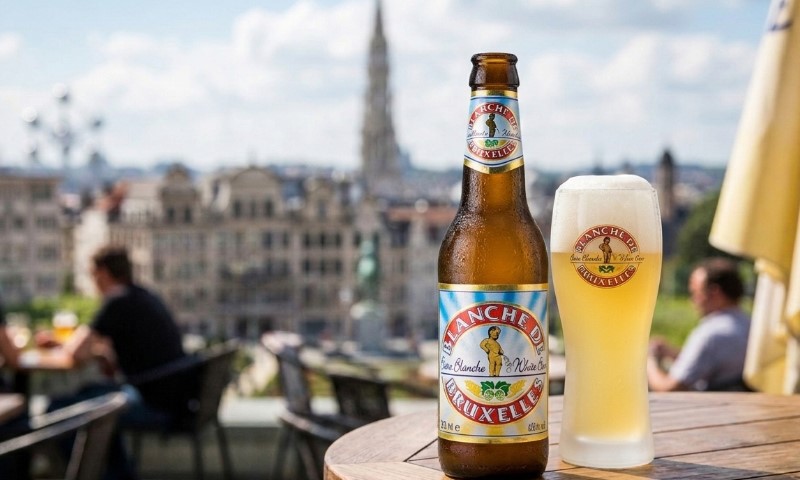
- Respect the Glassware: Almost every Belgian beer has its own custom-shaped glass designed to maximize the foam head and volatile aromatics. Bartenders take pride in pouring each style into its corresponding brand glass.
Know the Local Styles
- Gueuze / Lambic: Wild-fermented beers unique to the Brussels region; complex, dry, tart, and intentionally sour.
- Trappist & Abbey Ales: Monastic-style beers (Dubbel, Tripel, Quad) known for deep malt flavors and higher alcohol content (often 7% to 11% ABV).
- Kriek: A fruit lambic aged with whole sour cherries; distinctly tart and refreshing compared to artificially sweetened fruit beers.
A Practical Two-Day Brussels Itinerary
A balanced first visit keeps each day geographically coherent. Avoid switching repeatedly between the city centre and outer districts.
| Time | Day One | Day Two |
| Morning | Grand-Place, historic streets and galleries | Atomium or Horta Museum |
| Lunch | Centre or Sainte-Catherine | Heysel, Saint-Gilles or Sablon |
| Afternoon | Mont des Arts and one museum | European Quarter or Marolles |
| Evening | Grand-Place after dark | Beer café or neighbourhood dinner |
Rain changes the order more than the content. Put museums, galleries and food stops into wet periods, then use clearer breaks for Grand-Place, Sablon and mural walks.
Travellers who prefer architecture can choose Horta Museum on the second morning and visit the Atomium later. Anyone more interested in politics and modern history can dedicate the afternoon to Parlamentarium and the House of European History.
Getting Around Brussels
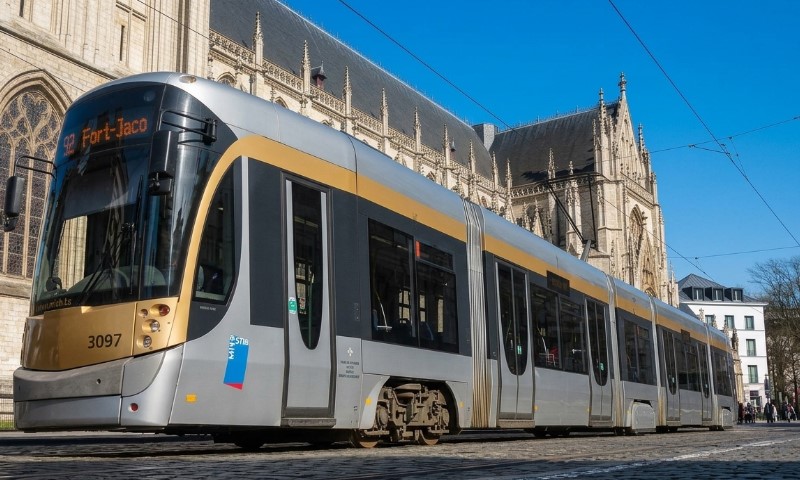
Walking covers much of the centre, while STIB-MIVB transport is useful for outer districts. Contactless payment works across metro, tram and bus services.
A single contactless journey costs €2.40, as of July 2026; transfers within 60 minutes are included when the same card or device is tapped, and daily charges are capped at €8.50. One bank card, phone or watch cannot validate several passengers, so every traveller needs a separate payment method. Review the latest contactless fare rules before travelling.
From Brussels Airport-Zaventem, direct trains serve central Brussels. Belgian rail lists an 11-minute journey to Brussels-Central on the fastest services, while the average journey between the airport and Brussels is closer to 20 minutes depending on the service and arrival station. Current schedules and supplement details appear in the official airport rail information.
The Brussels Card can make sense for museum-focused trips. In 2026 it covers 47 museums and comes in 24, 48 or 72-hour versions, with optional public transport and Atomium add-ons.
Calculate the museums you genuinely expect to visit before buying, since outdoor-focused visitors may spend less with individual tickets. Check the available versions through the official Brussels Card details.
How Many Days Do You Need in Brussels?
Two full days are enough for the main first-time activities. One day covers the historic centre, a museum and an evening meal, but forces a choice between the Atomium, Art Nouveau and the European Quarter.
Visitors staying longer can use Brussels as a base for rail trips to Ghent, Bruges, Antwerp or Leuven, although each destination deserves most of a day rather than a rushed afternoon.
FAQs
Plan What to Do in Brussels Ahead of Visit
A strong first visit combines famous landmarks with one or two experiences that explain Brussels.
Grand-Place supplies the historic centrepiece, while a museum, Art Nouveau interior or EU visitor centre adds context. The Atomium earns its place when modern architecture or Expo history matters to you.
Plan by neighbourhood, reserve small-capacity attractions, and leave space for food without treating every speciality as a checklist. Brussels rewards visitors who look closely at façades, murals, shopfronts and public spaces between the headline sights.