
Brussels works best when you resist racing between landmarks. Begin in the historic centre, let a few side streets interrupt the plan, then use the metro for one or two sights farther out.
At La Bourse Hotel, years of welcoming guests have revealed a useful pattern: first-time visitors remember the city most clearly when grand architecture is balanced with smaller surprises, from a comic mural above an alley to a market stall piled with old postcards.
The hotel stands opposite the former stock exchange and close to Grand-Place, so advice shared with guests often begins with a simple suggestion: explore the centre on foot before deciding how far you want to go.
Begin at Grand-Place, Preferably Twice
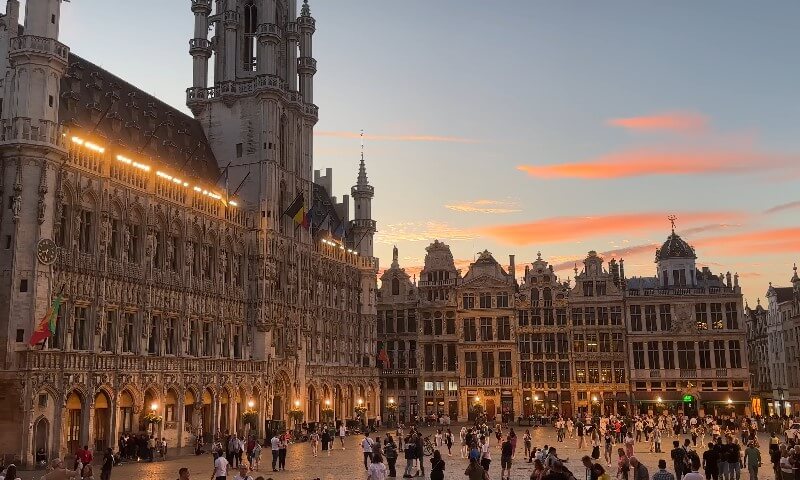
Grand-Place deserves to be the first stop. The square is enclosed by the Gothic City Hall, the Maison du Roi and richly decorated guild houses.
Brussels’ central square joined the UNESCO World Heritage List in 1998, while much of its present appearance grew from the rebuilding that followed the French bombardment of 1695.
The façades look carefully coordinated, yet separate guilds rebuilt their properties after the destruction. The official account of Grand-Place history explains how the square took shape.
Arrive early for clearer photographs, then return after dinner. Evening light catches the gold detailing, the cafés settle into a different rhythm and the square feels less like a monument viewed from a checklist.
Travellers interested in architecture can also book City Hall visits, including self-guided video itineraries and selected panoramic tours.
Allow at least 30 minutes for the square itself. An hour feels better when you include the surrounding lanes or the Brussels City Museum inside the Maison du Roi.
For lunch after exploring the square, Maharaja Tandoori is a convenient nearby option for Pakistani and Indian dishes, including tandoori grills, curries and biryani.
Walk the Classic Old-Centre Loop
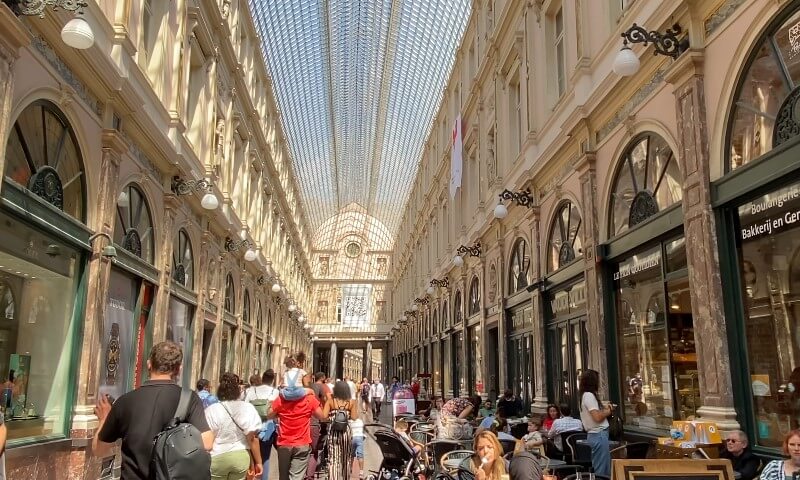
Several famous Brussels sights sit within a compact area around Grand-Place. A sensible loop runs from the square to Manneken-Pis, back through the Bourse district and onward to the Royal Saint-Hubert Galleries.
The route can take an hour at a brisk pace, though cafés and narrow side streets can easily turn it into half a day.
Meet Manneken-Pis Without Expecting a Giant Statue
Many first-time visitors laugh when they see how small Manneken-Pis is. The bronze figure dates from 1619 and originally formed part of a public fountain. His fame comes from Brussels folklore, local humour and a wardrobe containing well over 1,000 outfits.
The original statue is protected inside the Brussels City Museum, while the fountain displays a later copy. A visit to the nearby GardeRobe MannekenPis gives the joke far greater context. The official guide to Manneken-Pis history covers the statue’s role as an irreverent civic symbol.
Crowds gather during the middle of the day, so early morning offers a calmer look. After the photograph, keep walking. Nearby streets carry much of the atmosphere that makes the stop worthwhile.
Pause at the Bourse
View this post on Instagram
The former Brussels Stock Exchange now houses Belgian Beer World and a rooftop tasting area. Beer enthusiasts may want a ticketed visit; other travellers can admire the neoclassical building and continue through the pedestrian centre.
Place de la Bourse also works as a useful orientation point. Grand-Place lies a few streets away, Sainte-Catherine is westward and the central boulevards run north and south.
Look Up Inside the Royal Saint-Hubert Galleries
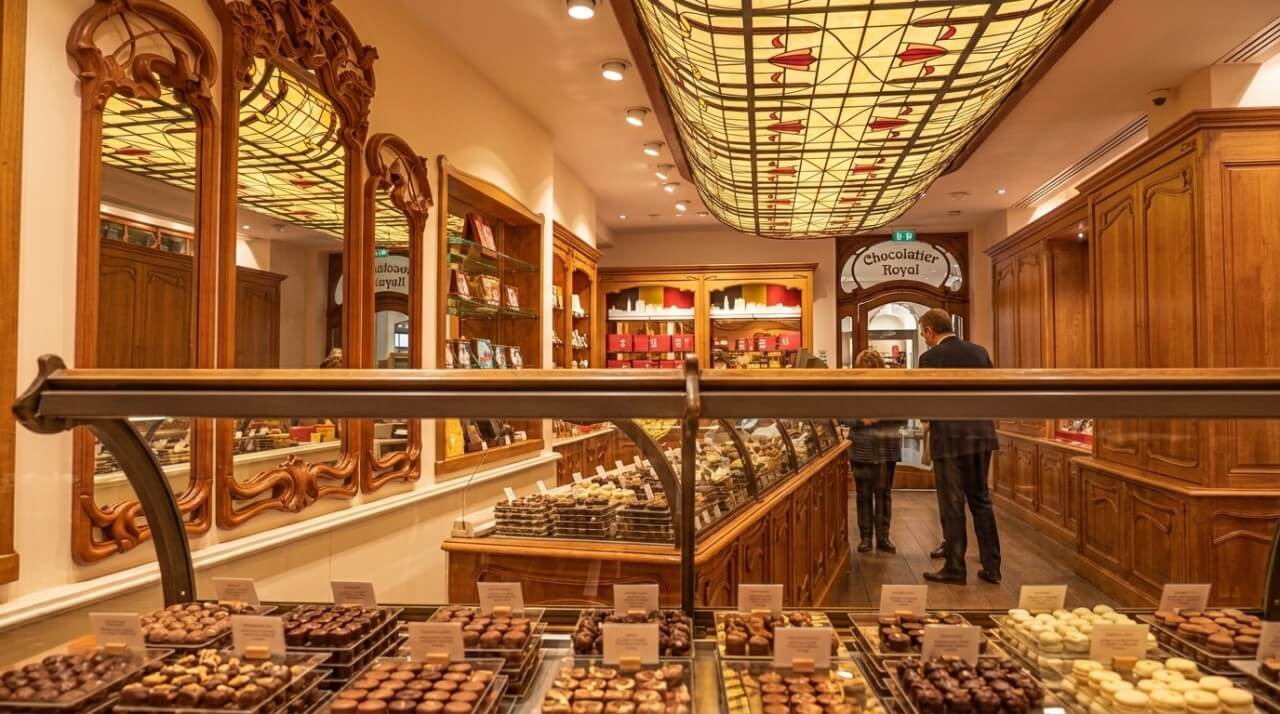
Opened in 1847, the Royal Saint-Hubert Galleries combine shops, cafés, theatres and a graceful glazed roof. The passage feels elegant in rain and especially atmospheric in the evening, when window light reflects across the stone floor.
Belgium’s first public cinema screening took place in the galleries, and the praline developed in the Neuhaus pharmacy associated with the arcade. A guide to the galleries’ architectural history adds useful background.
Walk through Galerie de la Reine and Galerie du Roi, pausing for a coffee or chocolate if the weather turns. The covered arcade is one of the easiest places to enjoy Brussels at a slower pace without leaving the centre.
Climb to Mont des Arts and the Royal Quarter
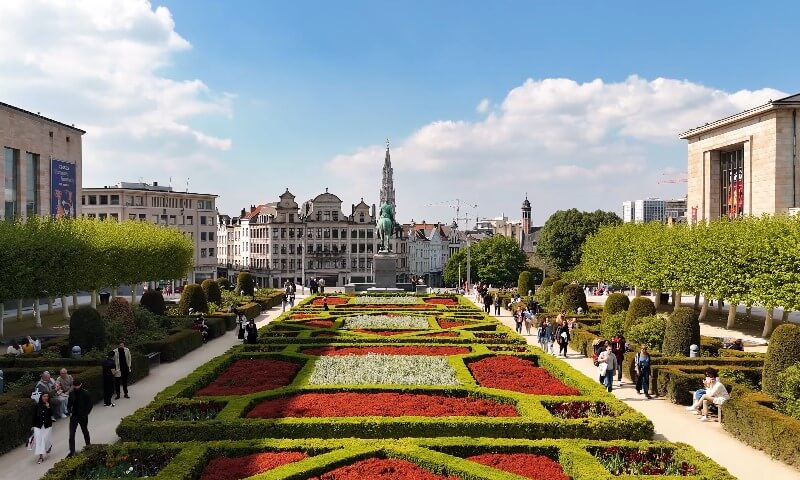
Mont des Arts links the lower historic city with the museums and formal avenues of the upper town. The garden and broad steps create one of Brussels’ most recognisable views, with the City Hall tower rising above layered rooftops.
Go near sunset when possible. Musicians often gather around the steps, and the viewpoint becomes an easy place to pause without purchasing a ticket. Mont des Arts sits between Grand-Place and Place Royale.
The museum choice nearby can become overwhelming. Pick according to personal interest:
- Choose the Magritte Museum for Belgian surrealism and a focused visit centred on René Magritte.
- Choose the Old Masters Museum for Bruegel, Rubens and wider European painting.
- Choose the Musical Instruments Museum for an unusual collection inside an Art Nouveau building.
Online booking is useful for the Magritte Museum, where entry arrangements differ for visitors who already hold timed tickets.
Across Brussels Park stands the Royal Palace, the King’s principal administrative workplace. Public access is seasonal. In summer 2026, the palace reopened after three years of renovation and admitted visitors from 3 July through 16 August with advance booking.
Travellers visiting in later seasons should check the official calendar for current Royal Palace access.
Spend an Afternoon Between Sablon and Marolles
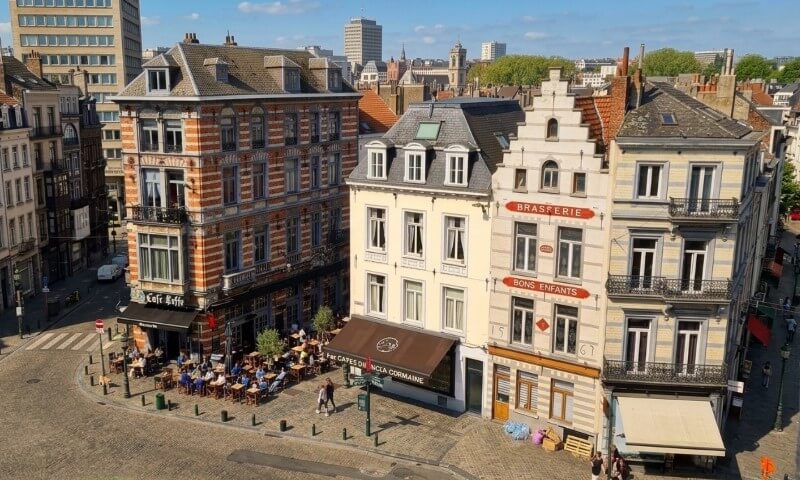
Grand Sablon has antique dealers, established chocolatiers and café terraces arranged around a sloping square. The Church of Our Lady of Victories brings Gothic scale to the neighbourhood, while nearby Petit Sablon offers a compact garden framed by statues.
Walk downhill into the Marolles for a rougher, more local street scene. Place du Jeu de Balle hosts its flea market daily, generally until 14:00 on weekdays and 15:00 at weekends. Earlier visits bring the strongest selection and the liveliest bargaining.
Old cameras, records and household objects sit side by side, so browsing feels closer to a neighbourhood ritual than a polished antiques fair. The visitor guide to Sablon and Marolles provides further market and neighbourhood information.
Finish at Place Poelaert beside the Palace of Justice. The panorama reaches across the lower city, and the public lift nearby connects the upper square with the Marolles, saving tired legs after the climb.
Follow the Comic-Strip Trail
Comic art belongs in the streets of Brussels. Tintin, the Smurfs, Lucky Luke and many other characters linked to Belgian publishing appear on large murals across the centre. Some occupy obvious façades; others wait above side streets where people usually pass without looking up.
A dedicated route can fill several hours, though first-time visitors can weave selected murals into an existing walk. Good clusters appear around the historic centre, the Marolles and Sainte-Catherine.
The official comic-strip guide helps locate murals, museums and shops connected with the “ninth art”.
A mural hunt also gives children and teenagers something concrete to look for between historic buildings. Adults often become equally invested once the first few characters appear.
Take the Metro to the Atomium
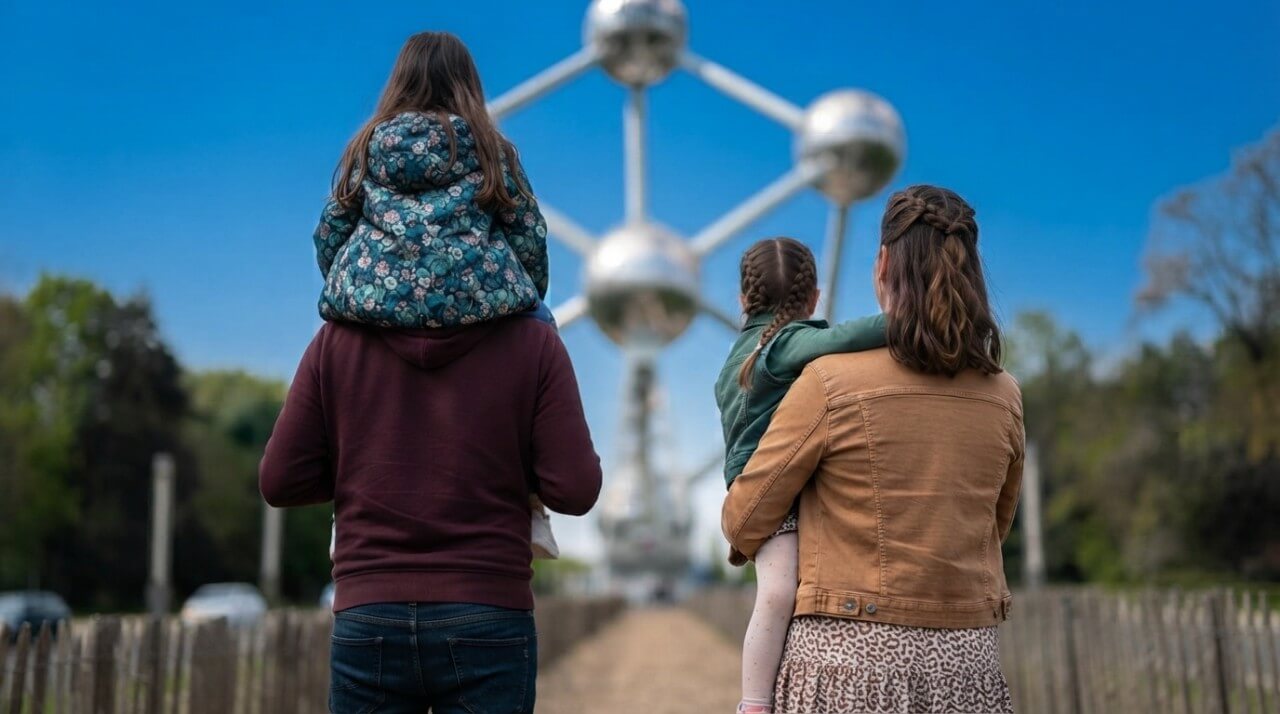
The Atomium stands away from the historic centre and deserves a dedicated outing. Built as the flagship structure of Expo 58, it represents an iron crystal magnified on a vast scale.
The Atomium began as a temporary Expo 58 structure. Public affection helped preserve it. A major renovation between 2004 and 2006 restored the building, and several spheres now hold exhibitions and displays about the 1958 world’s fair.
Use the official website to plan an Atomium visit, particularly during school holidays or major events around the Heysel plateau.
Inside, escalators run through tubes linking the spheres, creating a retro-futurist experience that feels as memorable as the panorama. Some areas involve stairs and changing levels, so visitors with mobility needs should check access information before booking.
Allow around two hours for the Atomium, longer when pairing it with Mini-Europe or the nearby Design Museum Brussels. Travellers with one day may prefer to remain in the centre. With two days, the Atomium fits well on the second morning.
Add the European Quarter When Politics Interests You
Brussels’ role as a centre of European Union institutions becomes tangible around Place du Luxembourg, the European Parliament and Parc Léopold. Glass offices and international crowds create a sharp change from the medieval centre.
The Parlamentarium offers a free, self-guided multimedia visit in the European Union’s 24 official languages. Most visitors spend around 90 minutes, and booking ahead improves the chance of entry.
A valid physical identity document is required for access to European Parliament buildings. The official Parlamentarium visitor details list opening times, security rules and accessibility information.
Travellers with little interest in politics can use the time for an Art Nouveau neighbourhood. The Horta Museum in Saint-Gilles occupies Victor Horta’s former home and studio, with preserved stained glass, mosaics and furniture. Timed reservations are mandatory.
How Much Can You See in One or Two Days?
View this post on Instagram
Group attractions by area to reduce backtracking and keep each day comfortable.
| Time available | Best plan |
| One day | Grand-Place, old-centre loop, Mont des Arts, Sablon and an evening return to Grand-Place |
| Two days | Follow the one-day route, then add the Atomium and either the European Quarter or Marolles |
| Three days | Add a major museum, a comic-art walk and an Art Nouveau visit such as the Horta Museum |
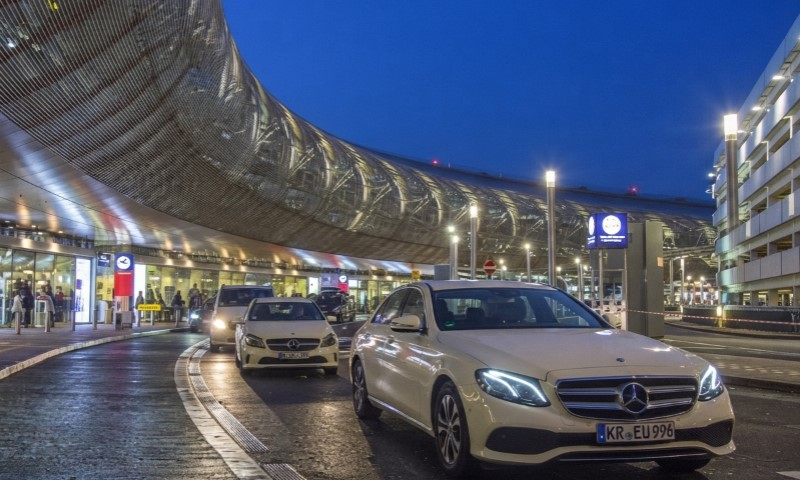
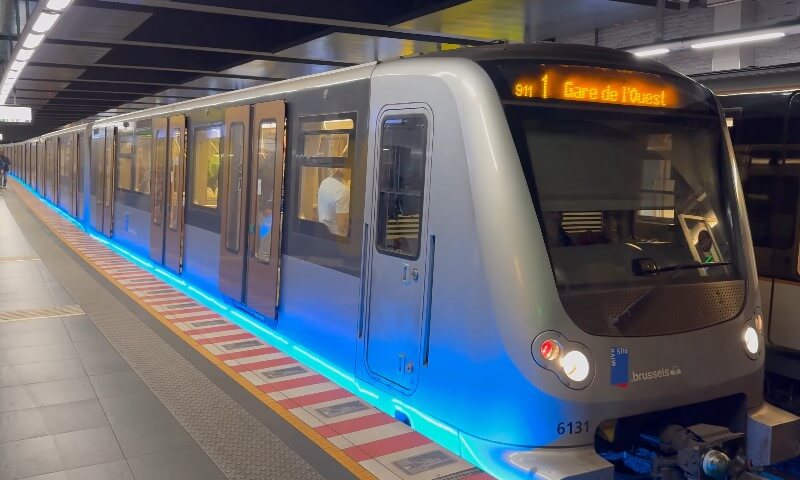
Most central sights are walkable, while the Atomium and outer neighbourhoods are easier by public transport. STIB-MIVB accepts contactless bank cards, smartphones and smartwatches across metro, tram and bus services. Each traveller needs a separate card or device.
Contactless public transport is convenient for short stays because no separate transit card is required.
Museum-heavy itineraries may benefit from the Brussels Card, available in 24, 48 and 72-hour versions with optional transport and Atomium add-ons. Calculate likely visits before buying, since a relaxed itinerary with one museum may cost less through individual tickets.
The official Brussels Card options explain the available combinations.
FAQs
Brussels Rewards a Little Room in the Schedule
The strongest Brussels itinerary leaves space between reservations. A mural can redirect a walk, and a café can become the place where the city finally clicks. Major landmarks give the visit structure; details found between them give Brussels its memory.
Choose a few anchors each day, keep the central routes flexible and return to one favourite place after the crowds thin. First visits rarely cover the entire city. They work best when they create a reason to come back.