
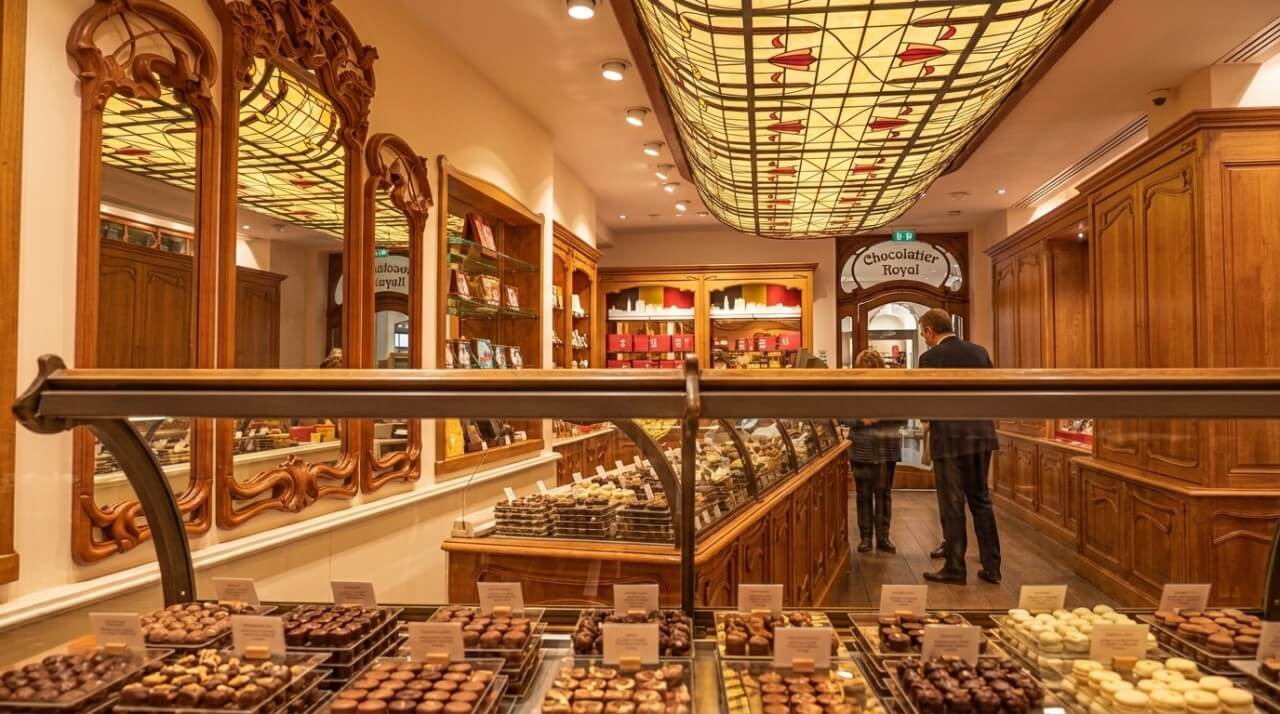
Brussels makes it unusually easy to turn a sightseeing walk into a chocolate tasting. Some of Belgium’s most established chocolate houses are concentrated around the Grand-Place, the Galeries Royales Saint-Hubert and the Sablon, while smaller artisan chocolatiers are scattered just beyond the busiest tourist streets.
If you are staying with us at La Bourse Hotel, you are particularly well placed for this. Our hotel is on Rue de la Bourse in the historic centre, so several of the city’s best-known chocolate shops can be reached while exploring the Grand-Place and surrounding streets on foot.
For a first visit, we would not try to find a single “best chocolate in Brussels.” The more interesting approach is to compare styles.
Buy a classic praline from Neuhaus, something more contemporary from Pierre Marcolini, an elegantly packaged assortment from Mary, and perhaps one of Laurent Gerbaud’s less conventional flavour combinations.
You will quickly discover that Brussels chocolate is much broader than the souvenir boxes stacked around the main tourist streets.
Neuhaus – for the classic Brussels praline
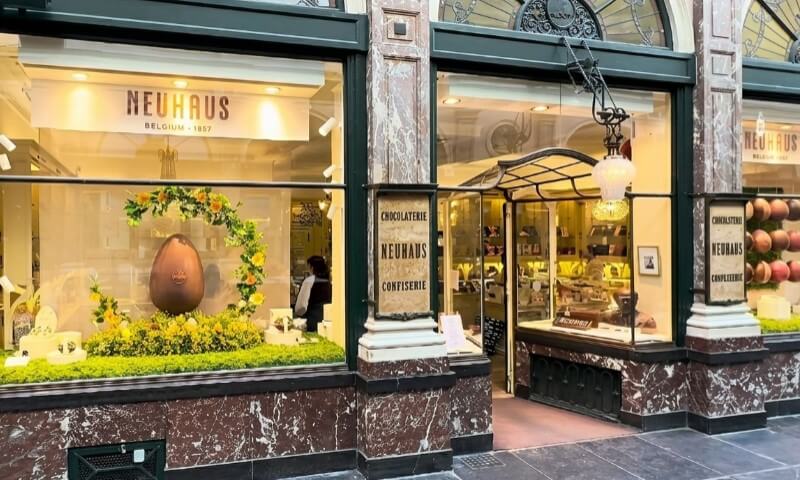
Where: Galerie de la Reine 25-27, 1000 Brussels
If you want to start with the chocolatier most directly connected with the history of the Belgian praline, go to Neuhaus in the Galerie de la Reine.
Jean Neuhaus’s family originally operated a pharmacy in the gallery, and the location eventually became the birthplace of the filled chocolate now known as the Belgian praline. Neuhaus still operates a boutique at the same historic gallery, making it much more interesting than simply buying the brand at an airport or department store.
For a first purchase, we would choose an assorted ballotin rather than committing to one flavour. It gives you a good introduction to the traditional Belgian style: relatively small chocolates with contrasting shells and fillings rather than oversized confectionery.
Neuhaus is also convenient if chocolate shopping is part of a general sightseeing day. The Galerie de la Reine boutique currently opens seven days a week, although opening hours can change and are worth checking through the Neuhaus store page before your visit.
Best for: first-time visitors, traditional Belgian pralines and a piece of Brussels chocolate history.
Mary – For an Elegant Chocolate Gift
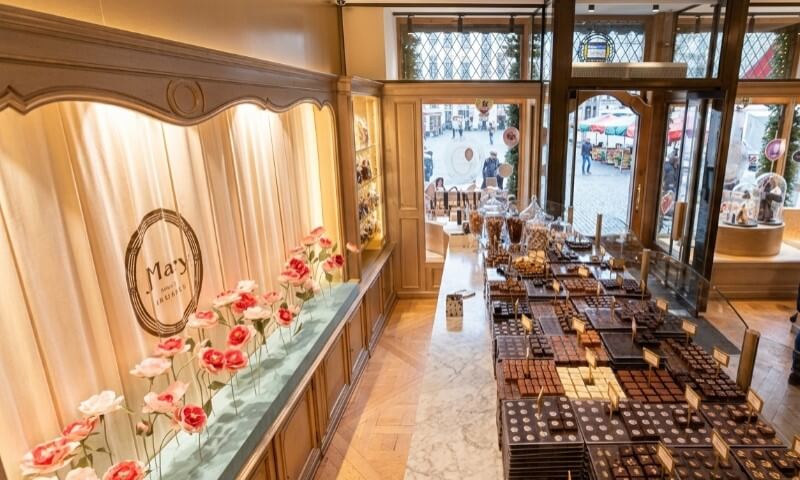
Where: Galerie de la Reine 36 and other central Brussels locations
Walk a little farther through the same gallery and you will find another very different Brussels institution.
Mary was founded by Mary Delluc in Brussels in 1919. The chocolatier remains known for handmade pralines as well as highly decorative boxes that make the chocolates particularly suitable as gifts.
Its fillings include ganache, caramel, cream, praline and marzipan, alongside hand-rolled truffles. You can explore the house and its chocolate selection on the official Mary website.
Presentation is a larger part of the experience here than at many contemporary chocolate shops. If you are buying something to take home for another person rather than simply assembling chocolates for yourself, Mary is one of our favourite stops.
There are several useful locations in central Brussels. The Galerie de la Reine shop is at number 36, while another boutique sits directly on the Grand-Place at number 23. Mary’s Brussels store listings provide the current locations and opening details.
Best for: beautifully presented gifts, classic pralines and traditional Brussels atmosphere.
Pierre Marcolini – For Modern Belgian Chocolate
Where: Rue des Minimes 1, near Grand Sablon
For a noticeably more contemporary interpretation of Belgian chocolate, continue uphill toward the Sablon.
Pierre Marcolini established his chocolate house in Brussels in 1995 and has become particularly associated with a bean-to-bar approach. Rather than working only with finished couverture, the house selects cocoa beans and controls the process of creating the chocolate itself. The chocolatier explains more about this philosophy in its overview of the Marcolini house.
The flavours also move farther from the traditional Belgian assortment. Ingredients used across Marcolini’s creations have included Sicilian lemon, Iranian pistachios, Sichuan pepper and pink berries from Morocco.
That makes Marcolini a useful second or third stop after tasting more traditional pralines. Instead of asking which house is objectively better, compare how the balance changes: thinner shells, stronger cocoa character, different textures and more pronounced aromatic ingredients.
The Sablon boutique at Rue des Minimes 1 is open seven days a week according to the chocolatier’s Sablon boutique information.
Best for: contemporary flavours, sophisticated gifts and visitors interested in cocoa itself.
Wittamer – Combine Pralines With Brussels Pâtisserie
View this post on Instagram
Where: Place du Grand Sablon 12
The Sablon is probably the easiest neighbourhood in Brussels for comparing several excellent chocolate houses without walking far between them.
One of its longstanding names is Wittamer, whose history in Brussels dates to 1910. The company began as a bakery and later expanded into pâtisserie and chocolate; its chocolate shop on the Grand Sablon dates from the 1980s. The company’s history of Maison Wittamer traces this development in more detail.
The selection includes both boxed chocolates and individual creations, with traditional praline, ganache and nut-based combinations represented alongside pastries and other sweets. Visit Brussels highlights creations including the Tarragona praline and Pavés de Bruxelles among Wittamer’s chocolate specialities.
Wittamer makes particular sense if not everyone in your group wants pralines. One person can concentrate on the chocolate counter while someone else looks at pastries, macarons or baked goods.
Its Sablon boutique is currently open every day, although hours differ slightly through the week. The latest schedule is available through Wittamer’s boutique information.
Best for: pralines plus pâtisserie and a traditional Sablon experience.
Passion Chocolat – For a Large Praline Selection
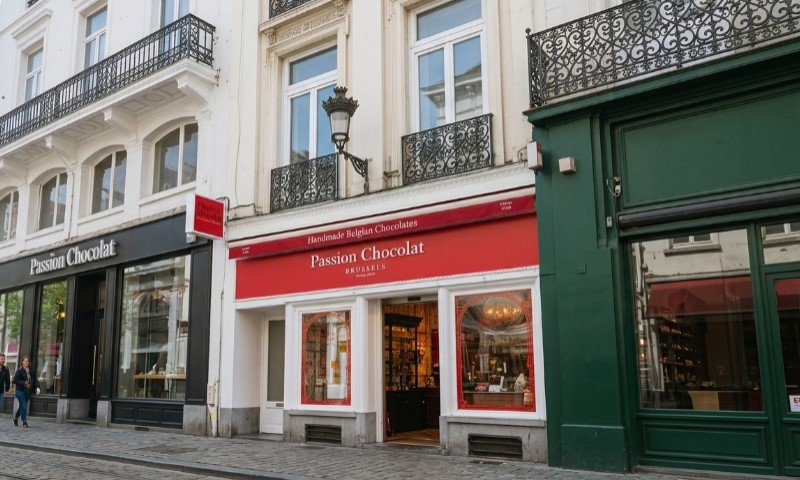
Where: Rue Bodenbroek 2/4, Grand Sablon
When you want choice rather than a famous name, Passion Chocolat deserves a stop.
Founded in 1998, the Brussels chocolatier focuses heavily on artisanal pralines, and its current range includes more than 70 varieties, according to the Passion Chocolat website.
That makes this one of the better shops for building your own assortment. Instead of buying a box where every piece has already been chosen for you, ask the staff about differences in filling and select a mixture of ganaches, nut pralines, caramels and darker chocolates.
The Grand Sablon boutique is at Rue Bodenbroek 2/4. Current published hours show it open Tuesday through Sunday and closed on Monday. Check the Grand Sablon shop page for current details before visiting.
If you enjoy comparing chocolate rather than simply buying the most famous label, we would include Passion Chocolat on a Sablon tasting walk alongside Marcolini and Wittamer.
Best for: creating a personalised box and trying several praline styles.
Laurent Gerbaud – For Flavours You May Not Expect
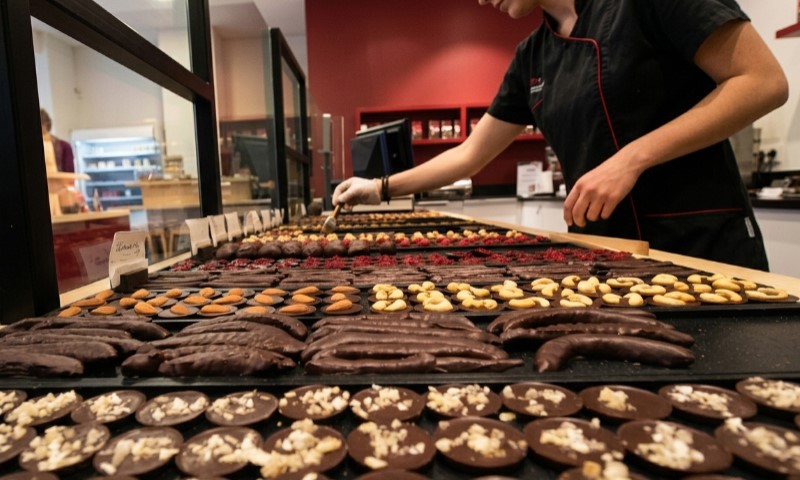
Where: Rue Ravenstein 2D, near Mont des Arts
Traditional hazelnut pralines are only part of Brussels’ chocolate culture.
At Laurent Gerbaud, chocolate is combined with ingredients influenced by travel, spices and dried or candied fruit.
Combinations have included ingredients such as curry, Jamaican pepper, chai tea, olives and Persian berries, while Gerbaud describes his approach as bringing together chocolate with unusual sweet and savoury flavours.
The Rue Ravenstein shop is particularly enjoyable because it is more than a retail counter. The chocolates are handmade in the workshop behind the boutique, and the location also functions as a tasting room where you can stop for coffee or hot chocolate. Practical information is available through the Laurent Gerbaud boutique page.
This is where we would send someone who has already tried classic Belgian pralines and wants something less predictable.
Gerbaud also runs chocolate workshops at the Ravenstein location, including scheduled Saturday sessions, although reservations are required. Details and availability can be checked on the chocolate workshop page.
Best for: adventurous flavours, artisan chocolate and sitting down for a tasting.
Planète Chocolat – For Chocolate Plus a Demonstration
View this post on Instagram
Where: Rue du Lombard 24
If you want to understand how pralines are made rather than simply buy them, Planète Chocolat adds another dimension to the experience.
The shop is on Rue du Lombard between the Grand-Place and Manneken Pis, putting it conveniently within a central Brussels sightseeing route.
Alongside its retail chocolate selection, it offers scheduled chocolate demonstrations and workshop experiences. The Planète Chocolat visitor listing provides additional practical information.
The demonstrations explain parts of the chocolatier’s work and provide useful context for what you have been tasting elsewhere. For families or visitors particularly interested in food production, that can be more memorable than visiting another conventional shop.
If you want a broader introduction to cocoa and Belgian chocolate, Choco-Story Brussels is also close to the Grand-Place and includes a praline-making demonstration as part of the museum experience. You can find further details in the Choco-Story Brussels listing.
Best for: families, demonstrations and travellers interested in how chocolate is made.
Frederic Blondeel – Worth Leaving the Historic Centre For
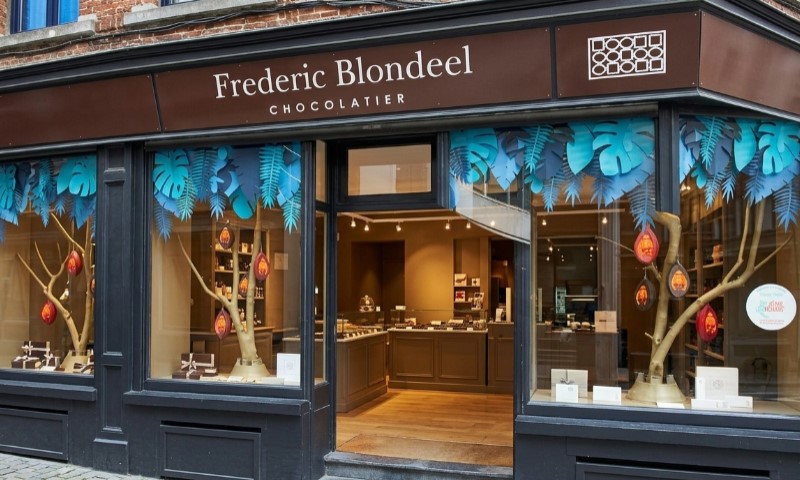
Where: Rue de Ganshoren 39, Koekelberg
Visitors who are especially interested in chocolate may want to make one trip beyond the central tourist district.
Frederic Blondeel operates an urban roastery, chocolate atelier, shop and café in Koekelberg. Blondeel is a bean-to-bar chocolate maker who roasts cocoa himself, giving visitors an opportunity to explore chocolate from a production perspective rather than concentrating solely on finished pralines. The Frederic Blondeel website introduces the chocolatier’s approach and current range.
His selection extends from pralines to single-origin bars, orangettes, biscuits, chocolate-covered nuts and other creations. The shop also functions as a coffee and ice-cream bar.
We would not necessarily recommend making this your first chocolate stop in Brussels. Start with the historic centre, then visit Blondeel if you become curious about cocoa origins, roasting and bean-to-bar production.
Best for: serious chocolate enthusiasts and bean-to-bar chocolate.
A Simple Chocolate Walk From la Bourse Hotel
One advantage of staying in central Brussels is that you do not need to turn chocolate shopping into a separate excursion.
From La Bourse Hotel, start around the Grand-Place and walk into the Galeries Royales Saint-Hubert for Neuhaus and Mary. From there, continue toward Mont des Arts for Laurent Gerbaud.
You can then walk uphill to the Grand Sablon, where Wittamer, Pierre Marcolini and Passion Chocolat sit within a compact area.
The neighbourhood is particularly convenient for chocolate lovers because several leading chocolatiers are concentrated around the square, as outlined in this Sablon neighbourhood guide.
Rather than buying a large box at the first shop, our advice is to purchase a few pieces at several places. Chocolate tasting becomes much more interesting when you compare the houses side by side.
FAQs
How to Choose Pralines Without Buying Too Much
A beautiful shop window can make twenty chocolates seem perfectly reasonable. After the third chocolatier, it becomes clear that they were not.
Ask for small assortments or individual pieces whenever possible. Choose different types of filling rather than several versions of the same thing: perhaps one hazelnut praline, one dark ganache, one caramel, one fruit-based chocolate and one unusual house speciality.
Also tell the staff when the chocolates will be eaten. If you are flying home several days later, they can advise you which products travel particularly well.
During warm weather, avoid carrying chocolate around Brussels for an entire afternoon. Buy your larger gift boxes toward the end of the day, return them to the hotel, and keep them away from direct sunlight and heat.
Most importantly, do not feel obliged to buy chocolate simply because a shop is famous. Brussels gives you enough choice to discover whether you prefer the traditional style of Neuhaus and Mary, the modern approach of Marcolini, the broad selection at Passion Chocolat or Gerbaud’s more adventurous combinations.
That comparison is part of the pleasure. In a city where several excellent chocolatiers can be visited during a single walk, the best box of pralines is often the one you assemble after tasting Brussels for yourself.