
Brussels makes eating well remarkably easy. A first visit should leave room for a proper Brussels waffle, hot frites from a paper cone, grey shrimp croquettes, Belgian chocolate, moules-frites and at least one slow-cooked brasserie dish such as carbonnade or stoemp.
Location helps. At La Bourse Hotel, we regularly meet travelers trying to decide where to eat between museum visits, shopping and walks around the historic centre. Our central Brussels location, opposite the former Stock Exchange and close to Grand-Place, makes a convenient starting point for many of the addresses below.
A useful approach is to treat Brussels food as part of sightseeing. Have a waffle near Grand-Place, wander to Sainte-Catherine for seafood, stop for chocolate around Sablon, then save a brasserie dinner for later. Hunger becomes a surprisingly effective tour guide.
1. Maharaja Tandoori for Pakistani and Indian Food
View this post on Instagram
Belgian food deserves plenty of attention during a Brussels trip, but a few days in the city usually creates room for something different. Maharaja Tandoori offers exactly that, with Pakistani and Indian cooking only steps from La Bourse Hotel.
The restaurant specialises in tandoori grills, curries, biryani and dishes such as chicken tikka, seekh kebab, butter chicken and mixed grill. It uses traditional spices and serves 100% halal food.
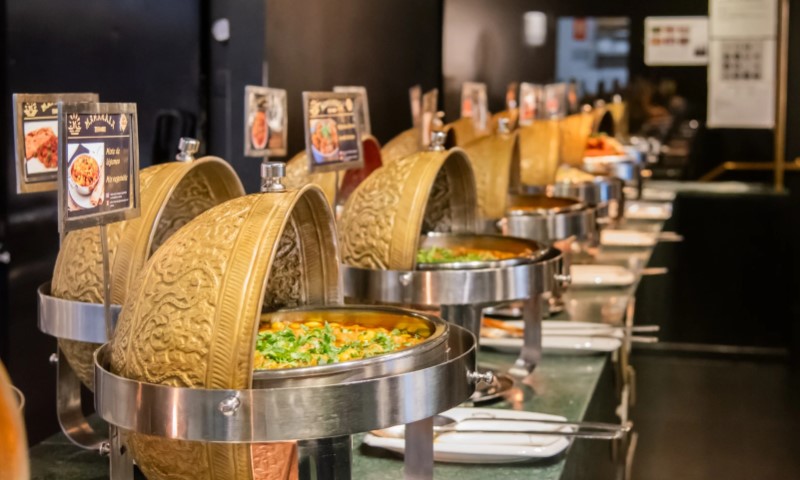
Its all-you-can-eat buffet can be particularly useful for travelers who want to sample several dishes rather than commit to one unfamiliar order.
The selection changes daily and currently includes grilled items, biryani and other rice dishes, chicken, lamb, beef, vegetable preparations, lentils, naan and desserts such as kulfi.
The location makes Maharaja Tandoori especially convenient after a long sightseeing day. It sits on Rue de la Bourse, close to Grand-Place and practically on our doorstep, so guests can have a substantial dinner without planning another journey across Brussels.
2. Maison Dandoy for a Brussels Waffle and Speculoos
For a sweet introduction to Brussels, begin at Maison Dandoy near Grand-Place.
Brussels waffles differ noticeably from the denser Liège version sold at many street stands. A traditional Brussels waffle is rectangular, relatively light and crisp around the edges, with a softer interior. Its comparatively neutral batter also explains why powdered sugar, chocolate or whipped cream work so well on top.
Dandoy adds another Brussels classic to the same stop: speculoos. The house says its recipe descends from the founder’s family and still uses butter, brown sugar and wooden moulds. The traditional Dandoy speculoos comes flavoured with cinnamon and cloves, among other variations.
For a first waffle, keep the toppings restrained. Powdered sugar lets the texture and warm batter do most of the work.
3. Noordzee for Seafood at Sainte-Catherine
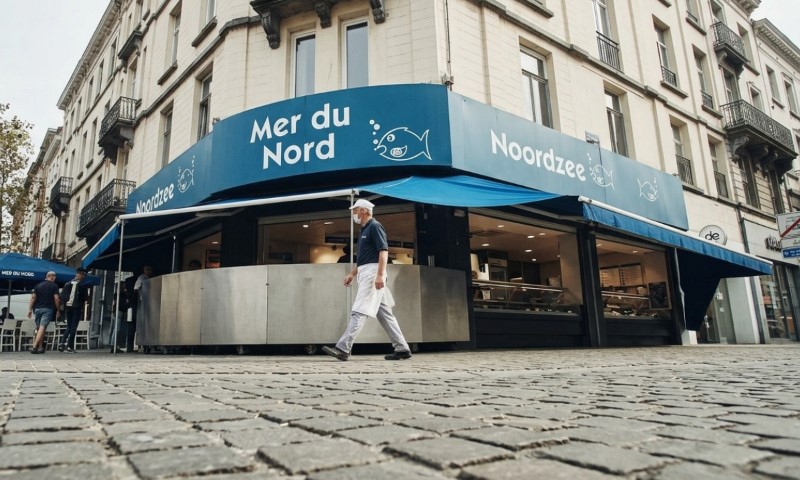
A few streets northwest of the Bourse, the atmosphere changes around Place Sainte-Catherine. Old seafood traditions still shape the neighbourhood, and Noordzee is one of its most approachable stops.
The business began as a fishmonger and developed into a well-known street-side fish bar. Visitors order at the counter and eat seafood around standing tables outside, giving lunch a lively market feel rather than a formal restaurant rhythm.
Visit Brussels lists shrimp croquettes, oysters, salmon and bouillabaisse among the foods commonly served there.
Go when you are happy to eat casually. A plate of seafood here fits naturally between a walk around Sainte-Catherine and the surrounding city-centre streets.
4. Fin de Siècle for Stoemp and Belgian Comfort Food
@flywithandreaEating traditional Belgium comfort food at Fin de Siècle in Brussels give! From lentil soup to Vol-au Vent and rabbit stew — it’s worth the wait.♬ Carefree Days – Peaceful Reveries
Some Belgian dishes make the most sense after several hours on foot. Fin de Siècle, on Rue des Chartreux, specialises in exactly that kind of meal.
Its current restaurant menu includes beer-braised carbonnade, sausages with stoemp, rabbit cooked with kriek beer and house vol-au-vent.
Stoemp deserves attention from anyone who assumes Belgian food begins and ends with waffles and fries. Mashed potato is combined with vegetables such as leek, carrot, chicory or onion, then commonly served with sausage, bacon or another hearty accompaniment.
Fin de Siècle works especially well for travelers who want a filling Belgian dinner without turning the evening into a formal occasion.
5. Nüetnigenough for Belgian Food With Serious Beer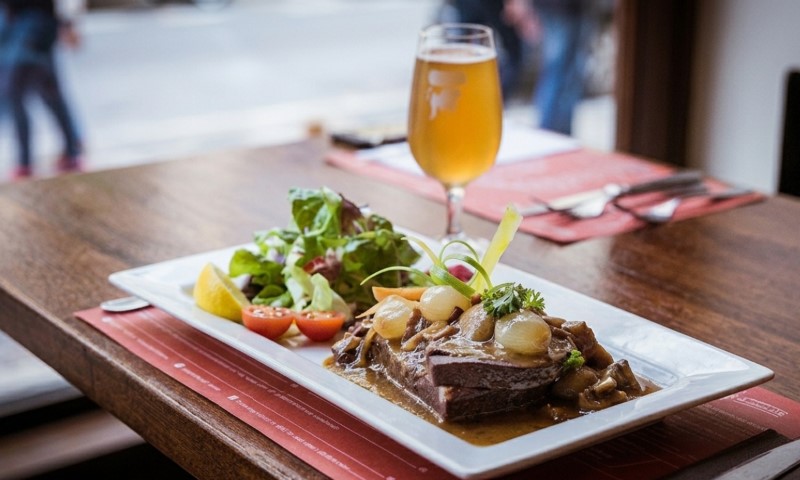
Near Manneken Pis and Grand-Place, Nüetnigenough is a compact brasserie built around Belgian cooking and an extensive interest in beer.
Visit Brussels recommends the address for local dishes and Belgian beers, making it useful for visitors who want to explore how the country’s brewing culture works alongside food.
The practical detail worth knowing comes directly from the restaurant: reservations are not taken. Guests arrive, take an available table or wait. Weekday service begins in the evening, while weekends start at noon.
Beer lovers can ask which pour works with their meal rather than automatically choosing the strongest or most famous label.
6. Chez Léon for Moules-Frites
Mussels and fries appear on menus across Brussels, yet Chez Léon remains one of the best-known historic places to try the combination.
The restaurant’s story goes back to Léon Vanlancker, who opened a small establishment near Grand-Place in 1888 before moving to Rue des Bouchers in 1893. The restaurant’s history still forms an important part of its identity today.
Mussels remain central to the menu. The restaurant’s mussels menu points visitors toward its marinière preparation served with fries, although several other mussel recipes are available.
Rue des Bouchers is heavily visited, so expect energy, crowds and plenty of restaurant activity. Chez Léon suits a traveler who wants the classic Brussels experience in a historic dining district.
7. Maison Antoine for a Proper Cone of Belgian Frites
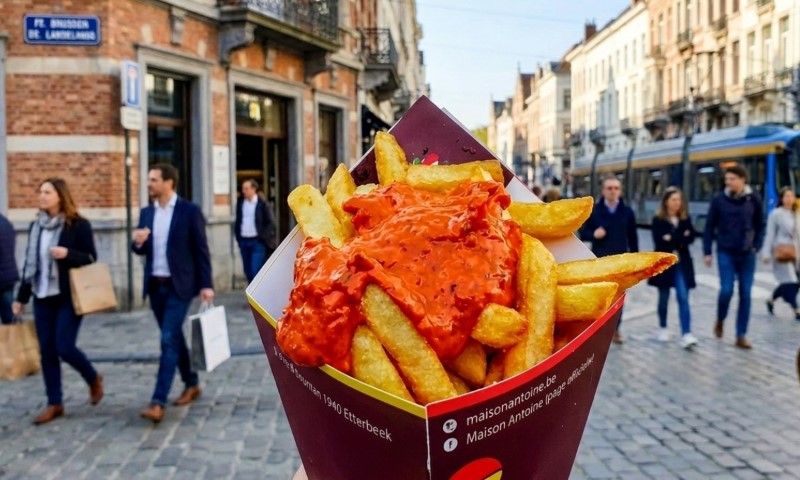
A dedicated food traveler should consider leaving the historic centre for one snack.
Maison Antoine has served frites at Place Jourdan since 1948 and remains a fixture of the square. Its official website confirms that the business is now run by the third generation of the family.
Order a cone and choose a sauce according to appetite. Mayonnaise is the obvious classic, while Belgian fritkots usually provide enough alternatives to turn sauce selection into a minor crisis.
Place Jourdan lies in Etterbeek, near the European Quarter, so the stop works well on a day that already includes Parc du Cinquantenaire or EU institutions. Making a special trip purely for fries also has a certain Brussels logic.
8. Pierre Marcolini for Chocolate Around Sablon
View this post on Instagram
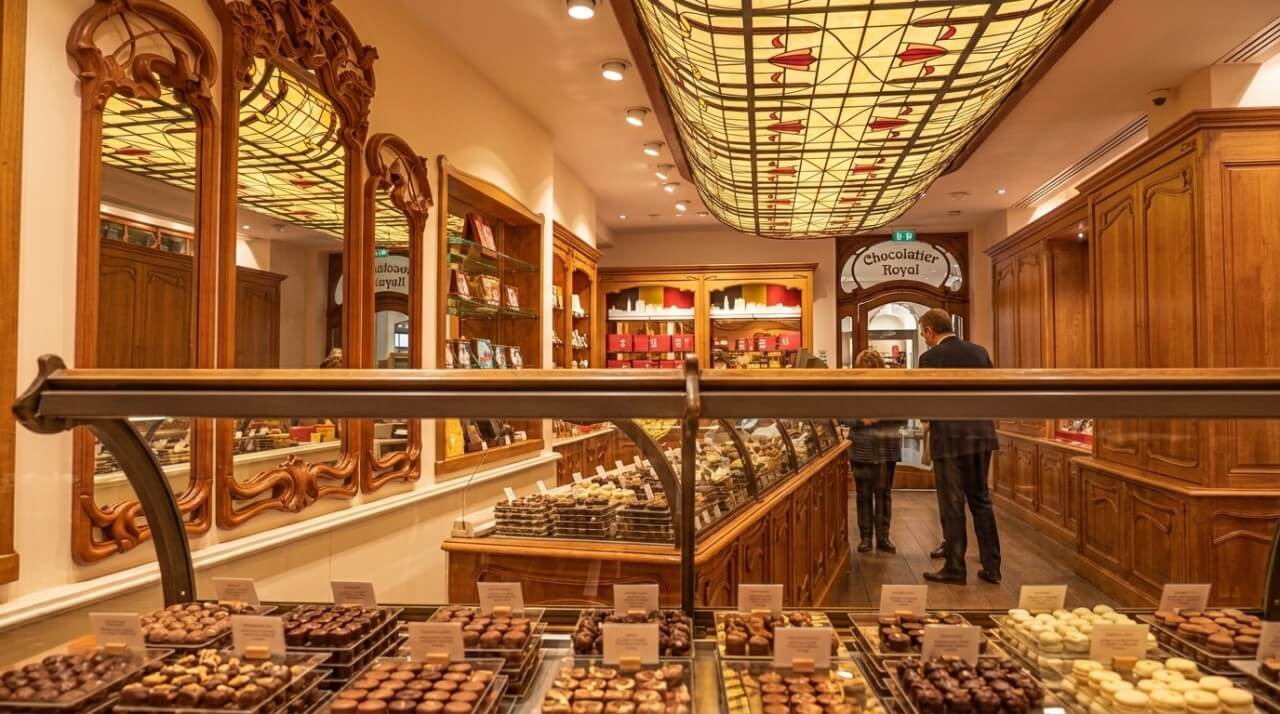
Belgian chocolate deserves time away from souvenir shelves. Around Grand Sablon, several established chocolatiers sit within a short walk of one another.
Pierre Marcolini Zavel is a particularly useful stop for visitors interested in contemporary Belgian chocolate craftsmanship. Visit Brussels’ chocolate shop guide notes that Marcolini works from cocoa bean through finished chocolate and operates several Brussels boutiques, including the Sablon address.
Brussels also has a rather good chocolate origin story. Jean Neuhaus developed the filled chocolate later known as the Belgian praline in the Galeries Royales Saint-Hubert in 1912, while Louise Agostini introduced the protective ballotin box in 1915.
Buy a small selection rather than a huge mixed box. Comparing a few pralines slowly is considerably more memorable than eating twelve while walking.
9. Le Cirio for Carbonnade in Historic Surroundings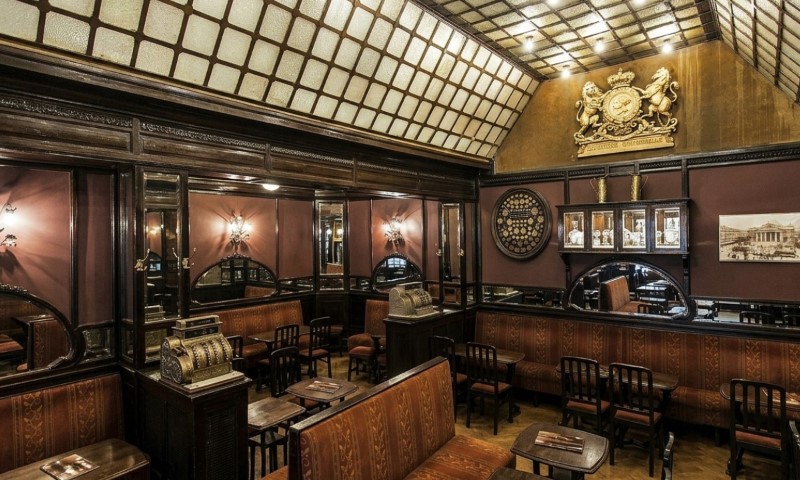
Few restaurants could be more convenient for guests beginning near the Bourse.
Le Cirio stands on Rue de la Bourse, only a few doors from our hotel. The brasserie traces its history to 1886 and retains a striking historic interior associated with Brussels café culture. Its current menu includes Belgian dishes such as carbonnade.
Carbonnade flamande is beef slowly cooked in a beer-based sauce, traditionally served with potatoes or fries. Older versions of the dish were associated with cooking over charcoal, which also helps explain the French name.
Le Cirio’s practical information lists daily opening, making the brasserie useful for lunch, dinner or a pause between city-centre sights.
10. Fernand Obb for Grey Shrimp Croquettes
A good shrimp croquette has a crisp fried shell and a creamy filling carrying the flavour of tiny North Sea grey shrimp. Brussels takes the dish seriously enough to hold an annual competition devoted to it.
Fernand Obb Delicatessen Saint-Gilles earned its reputation by winning the first two editions of the Brussels shrimp croquette competition. Its own croquette information says the grey shrimp version is made in-house.
For current context, the 2026 competition awarded first place to Journal in Stockel. Brussels’ croquette guide provides further information about the competition and recommended addresses. Fernand Obb remains a worthwhile tourist choice because Saint-Gilles is easier to combine with a broader neighbourhood visit and the restaurant offers several Belgian street-food interpretations.
Pair the croquette with a walk around Saint-Gilles rather than treating the neighbourhood as a quick food mission.
11. Pistolet Original for a Belgian Lunch on the Go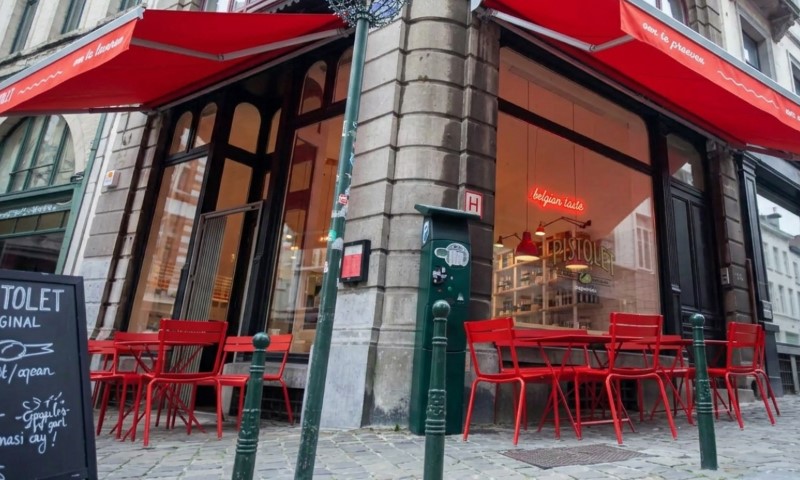
One of the easiest Belgian foods to miss is also one of the most practical for sightseeing.
A pistolet is a small round bread roll with a crisp golden crust and soft centre. At Pistolet Original near Sablon, the roll becomes a vehicle for Belgian fillings and recipes.
The current Pistolet Original menu includes combinations such as prepared beef tartare with cress, Belgian ham, white sausage and tomato with grey shrimp. Hot versions range from meatloaf with chicory to a pistolet filled with a grey shrimp croquette.
A pistolet works especially well at lunch when a long restaurant meal would interrupt sightseeing. Pick one up around Sablon, then continue toward the Marolles or Place Poelaert.
How to Build a Brussels Food Day Without Overdoing It
Trying every Belgian specialty before dinner is an excellent way to stop enjoying all of them.
Keep the First Half of the Day Central
Begin around the Bourse and Grand-Place. Maison Dandoy works for a morning waffle or speculoos stop. Sainte-Catherine and Noordzee fit naturally into lunch, while Fin de Siècle, Nüetnigenough, Chez Léon or Le Cirio can cover a substantial evening meal.
Sablon adds chocolate and pistolets without sending you far across the city.
Save One Neighbourhood for a Food Detour
Maison Antoine makes sense alongside the European Quarter. Fernand Obb pairs well with Saint-Gilles.
Choosing one outer-neighbourhood stop gives you a broader impression of Brussels while keeping most of the day walkable.
Back at La Bourse Hotel, our team can also help guests work out which neighbourhood suits the rest of their plans, whether dinner needs to follow a museum visit, a late arrival or an evening around Grand-Place.
What Should You Eat First in Brussels?
For a first visit, start with foods closely associated with the city itself: a Brussels waffle, shrimp croquettes, speculoos and chocolate. Add moules-frites, stoemp or carbonnade when you want a proper meal.
Brussels rewards curiosity at street level. One of the pleasures of eating here comes from moving between very different settings: an old brasserie, a crowded fritkot, a chocolate shop, a fish counter beside a square.
Leave some space between stops. Brussels tastes better when lunch can turn into a walk, and the next snack arrives because you are hungry again.